
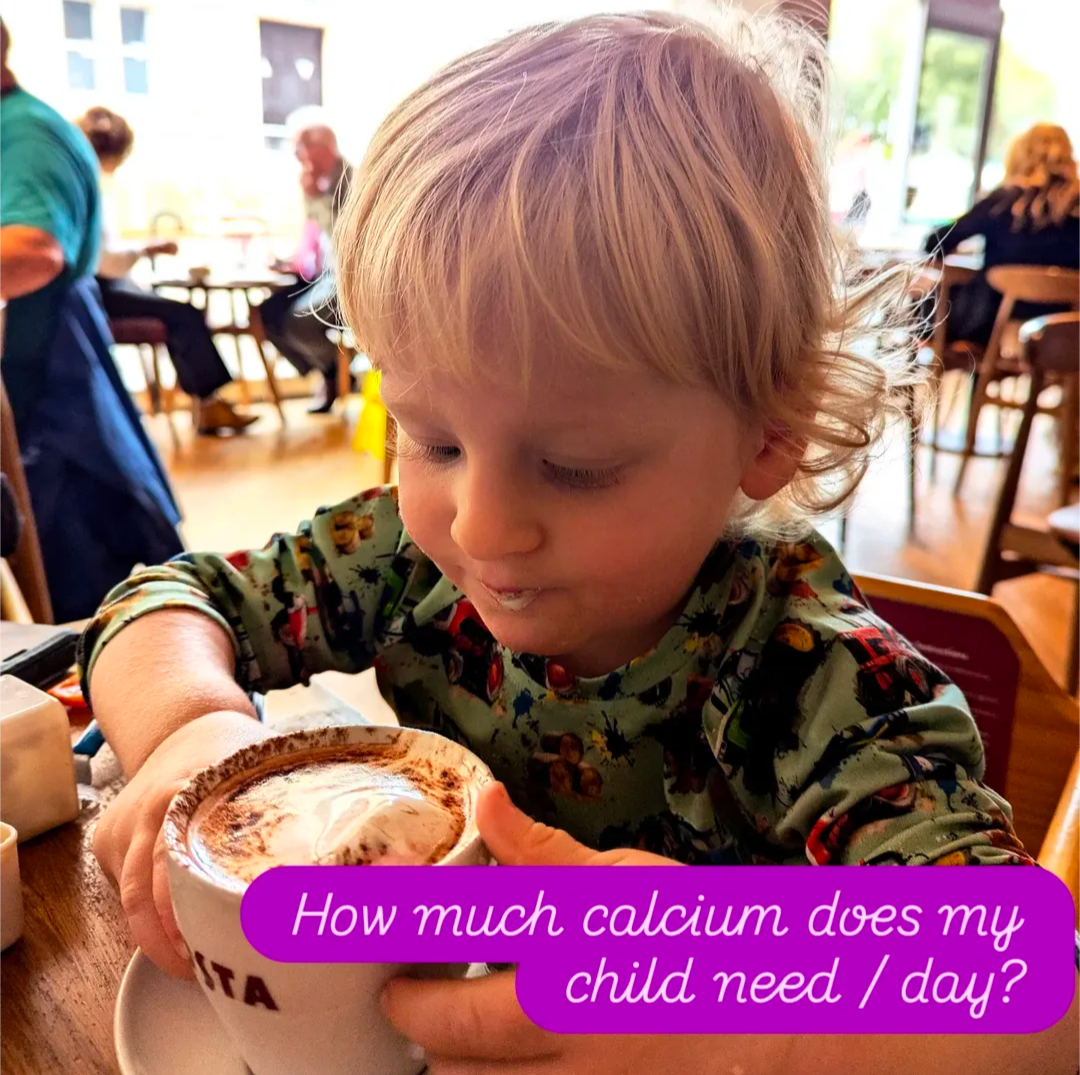
How much calcium does my child need per day?
🦴 Calcium in your child’s diet
Calcium is an essential mineral that helps build and maintain strong bones and teeth. It also plays an important role in muscle function and nerve signalling.
Vitamin D is needed to help the body absorb calcium effectively, so both nutrients work together to support bone health.
How much calcium do children need?
These are UK Dietary Reference Values (DRVs) based on population guidance:
0–12 months: ~525mg
1–3 years: ~350mg
4–6 years: ~450mg
7–10 years: ~550mg
11–18 years: ~800mg (girls) / ~1000mg (boys)
📚 UK reference values
These recommendations are based on UK dietary reference values set by expert committees and used in NHS and public health guidance:
Scientific Advisory Committee on Nutrition
and supported in clinical practice by:
British Dietetic Association
🥛 Foods that contain calcium (approximate values)
Dairy foods
100ml cows’ milk: ~120mg
30g cheddar cheese: ~200–220mg
120g yoghurt: ~150–200mg
30g cottage cheese: ~35–50mg
30g halloumi: ~200–250mg (varies by brand)
Non-dairy sources
100ml calcium-fortified plant milk: ~120mg
100g calcium-set tofu: ~350–400mg
30g calcium-fortified cereal: ~130–170mg
1 slice fortified bread (if fortified): ~80–170mg
½ tin sardines (with bones): ~250–400mg
85g broccoli: ~30–40mg
1 medium orange: ~25–30mg
A note on cow’s milk
For toddlers, high intakes of cow’s milk can reduce appetite for other foods and may increase the risk of iron deficiency, as it is low in iron and can interfere with iron absorption.
🍽️ Example calcium intake (toddler day)
Breakfast:
Fortified cereal (15g) + 50ml milk → ~120–130mg
Lunch:
Cheese on toast (fortified bread + 15g cheddar) + orange → ~220–250mg
Total: ~340–380mg (meets daily needs for 1–3 years)